
DIVIDED
The conversations everyone wants to avoid
Divided is a board game I designed to help people have respectful and empathic conversations about topics that tend to be polarizing, especially about entitlement over others’ bodies, families, and relationships (e.g. abortion and euthanasia). The purpose of this game is not to change participants’ opinions, as their perspectives about moral topics are grounded in deep non-negotiable values. Instead, I aim to strengthen people’s skills to navigate disagreement constructively and sustain meaningful conversations despite holding opposing viewpoints. The game includes a series of moral dilemmas and collage decks with ambiguous images that participants use to co-create stories responding to the dilemmas. Initially, I designed Divided for Latin Americans living in Florida to help this community initiate conversations with their friends and family about difficult topics that mattered to them. Since then, I have led workshops and talks across Colombia, adapting the game to address different topics and contexts, for example, new dilemmas regarding algorithmic surveillance, neurotechnology, and gene editing.
Game Design • Collage • Political Polarization
U.S. – Colombia
GAME PIECES

Board

Collages
Epojé cards
Wild cards
Dilemmas
Instructions booklet
There are two decks of dilemmas: La Final and Un Amistoso. Each presents real-life situations around socially and politically sensitive topics such as abortion, euthanasia, and same-sex marriage. Every dilemma ends with the question “What happens next?”, the starting point for players to co-create the story.
Players take ten collages each and take turns adding one to the board. The board includes reflection questions to encourage personal connection and critical thinking about the dilemma.
The collages help players imagine and visualize parts of the story. Their ambiguous nature invites multiple interpretations, and as players place them together, new connections and meanings emerge, showing how differences can coexist and generate shared narratives.


gameplay sessions in colombia and the u.s.


process highlights
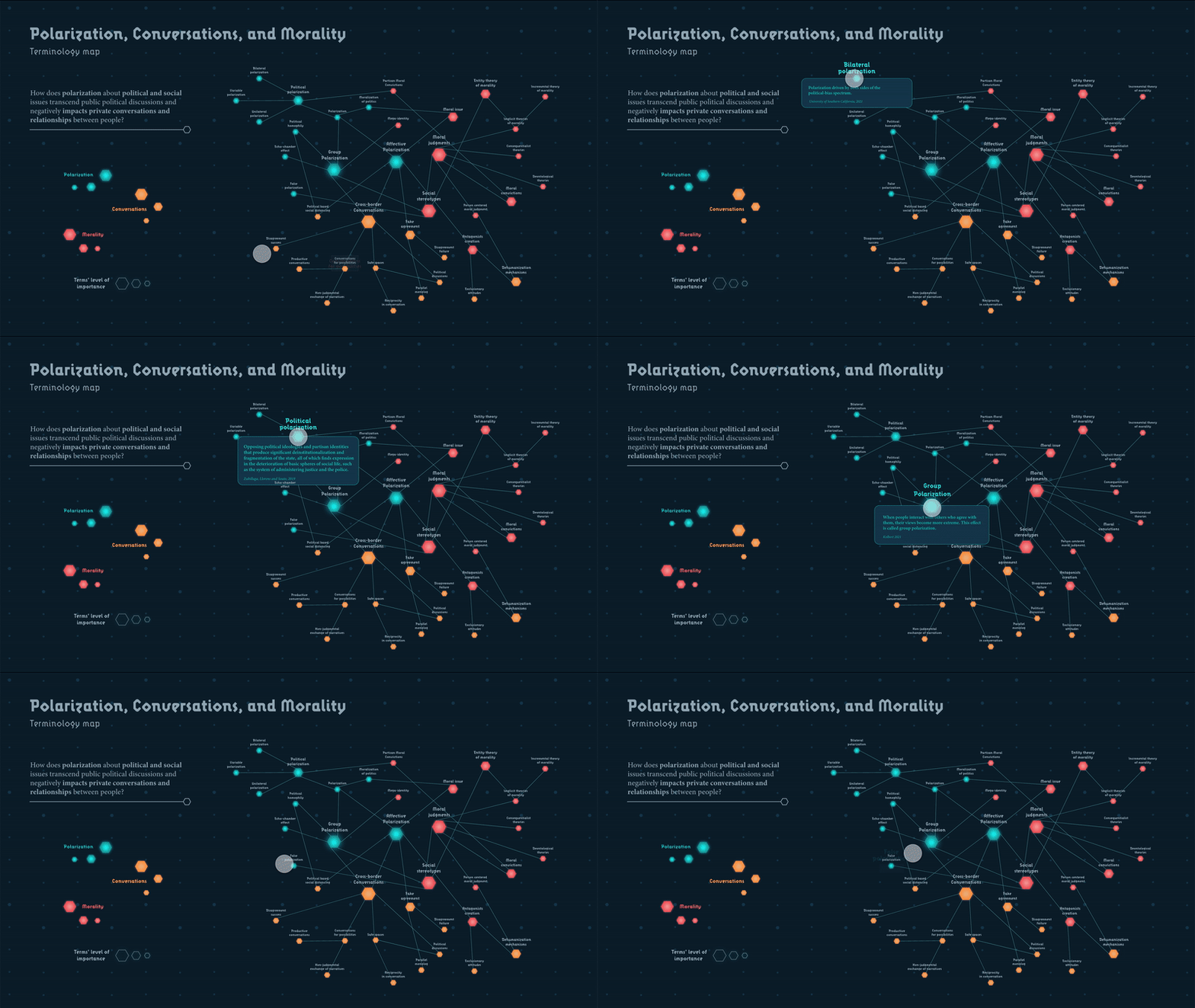
Literature review
I explored how polarization, conversation, and morality intersect. This helped me understand how the moral framing of political issues affects relationships and identify opportunities for design to intervene. I synthesized the main findings into an interactive map.

user
research
I conducted interviews and card sorting sessions with Latin Americans living in the U.S. to identify which polarizing topics mattered most to them. In these sessions we explored their motivations to addresss such topics, how personal experiences shaped their opinions, and the tensions that arose when discussing these issues with friends and family.

GAME TESTING
SESSIONS
I facilitated playtesting sessions to refine the game’s mechanics, prompts, and flow. Feedback from participants provided insights into how the conversations during the game fostered greater openness to different opinions by encouraging active listening, slowing down discussions, and exploring the personal experiences behind each perspective.